Dual-character mechanics
Designed mirrored control, six base rules and three combinations that create different demands on both characters.
See the design details ↓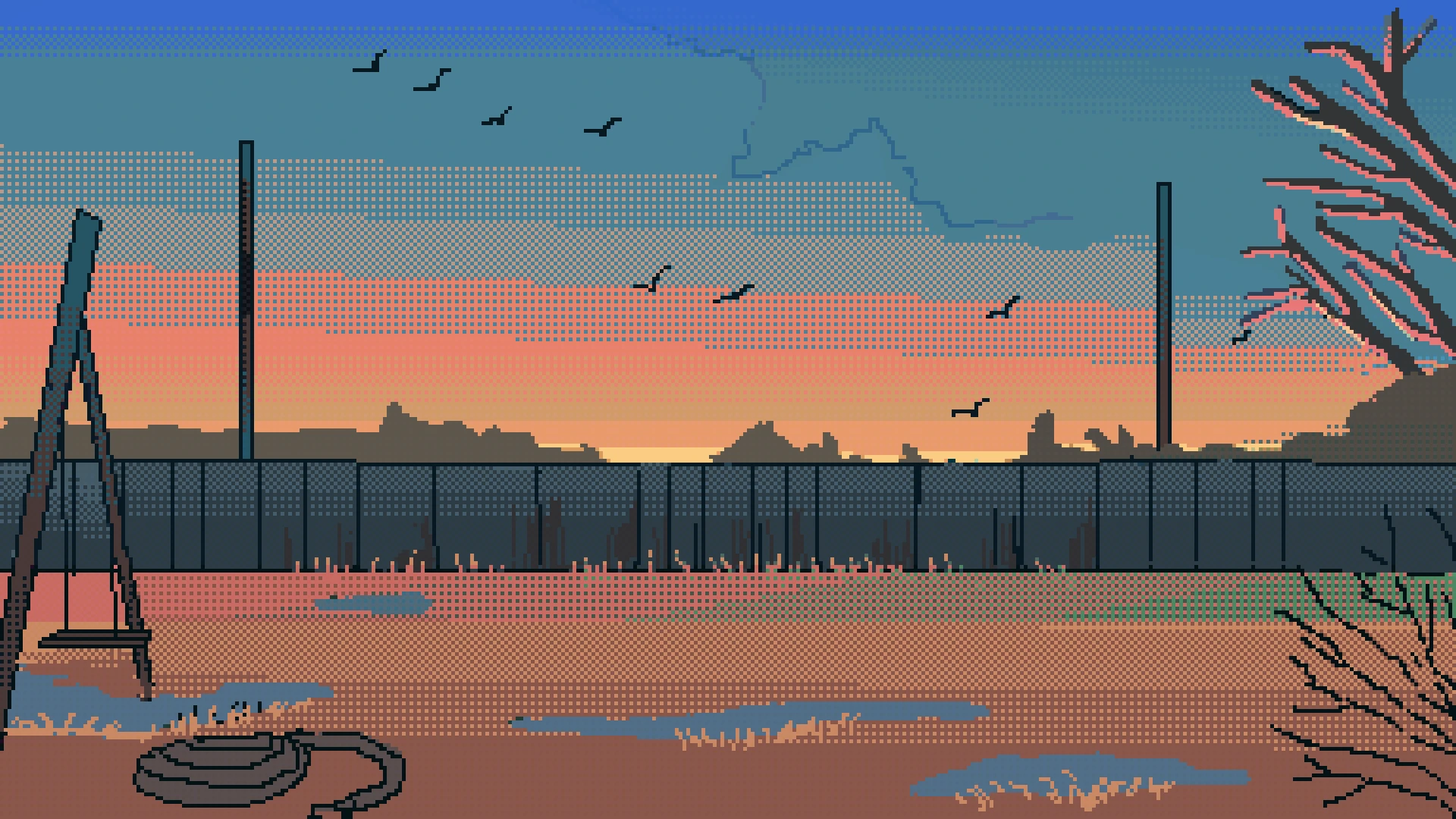 ← All projects
2D narrative puzzle-platformer

One player. Two characters. A shared escape.
Could a single player feel the mutual dependence of a cooperative game? Dawn Awaits explores that idea through a girl and her inner self, with mirrored movement, divided attention and a shared goal.
Single-player controls that require two-character cooperation.
Designed mirrored control, six base rules and three combinations that create different demands on both characters.
See the design details ↓Designed asymmetric routes and a four-stage progression from safe discovery to combined application.
See the design details ↓Implemented movement mapping, jump synchronization and character animation states.
See the design details ↓01 / DUAL-CHARACTER CONTROL
The girl and Domino move in opposite directions under the same input. Each action has a consequence on both routes, so players must watch both characters, anticipate obstacles and choose when one movement can help both. This recreates part of the coordination of cooperative play within a single-player puzzle.
02 / SINGLE RULES
Size changes weight and mobility, while dash creates brief opportunities to cross hazards. Gravity and rotating platforms change spatial relationships. The direction switch changes whether the two characters move together or in mirrored directions, and the clone adds a third character to monitor. Each image below shows the specific input or pickup and its visible result.
03 / COMBINED PUZZLES
The combined puzzles ask players to reconsider rules they already know. Gravity plus direction switching changes how the same input moves each character. Dash plus fire requires crossing between flame bursts. Shrink plus dash and moving saws combines a smaller passage with speed and timing.
04 / LEVEL DESIGN
In this level, stepping on and releasing a switch reveals its relationship with a saw. After collecting the grow pickup, the girl pushes the toy box onto another switch. The box holds the switch down, opens Domino’s route and keeps the girl’s saw passage safe. Domino then follows the lower route to a shrink pickup and uses the smaller size to pass a low gap.
05 / TEACHING STRUCTURE
I adapted Kishōtenketsu into four teaching stages. Ki allows safe experiments with size. Shō develops pushing, route opening and movement with hazards. Ten recombines gravity and direction to change a familiar situation. Ketsu chains known actions into a final run that ends with a diary fragment. The four diagrams below describe each stage separately.
06 / ENVIRONMENT & DIARY
The narrative uses environments and diary fragments to present the girl’s experience of domestic violence. The bedroom diary describes a fight as a hurricane. Family photographs, scattered petals, red stains and handwritten highlights connect those observations to the damaged home. The street scene marks the point where the girl’s imagined escape becomes an actual departure.
07 / UNITY IMPLEMENTATION
In the control implementation, Domino reads the main character’s horizontal input and jump state. The moveReversed flag selects matching or mirrored movement, while the animation logic updates walking and facing direction. The code and control diagram below show that connection; the Animator capture shows the state transitions used for the character.